
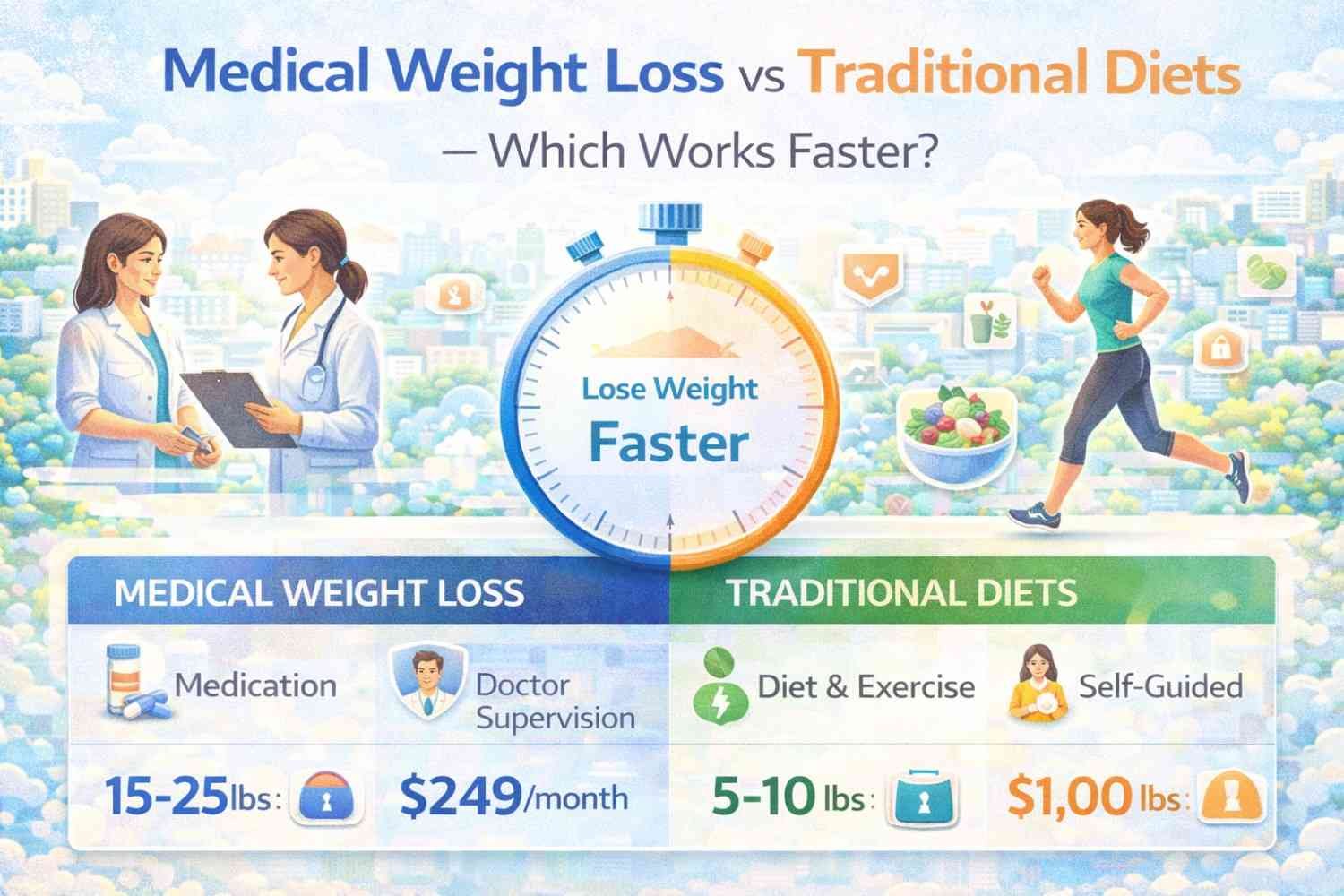
Weight loss has become one of the most searched health topics in the world as more people look for effective ways to improve their fitness, health, and overall lifestyle. With increasing awareness about obesity-related diseases such as diabetes, heart disease, and high blood pressure, individuals are exploring different weight loss strategies.
Two of the most commonly discussed approaches are Medical Weight Loss Programs and Traditional Diet Plans. While both methods aim to help individuals reduce body weight and improve health, they work in very different ways and often produce different results.
Many people struggling with weight management often wonder which approach works faster and more effectively: Medical Weight Loss vs Traditional Diets. In this guide, we will explore the differences between these approaches and help you determine which method may deliver faster and more sustainable weight loss results.
What Is Medical Weight Loss?
Medical Weight Loss refers to weight loss programs supervised by healthcare professionals such as doctors, nutritionists, or medical specialists.
These programs provide personalized treatment plans based on an individual’s health condition, metabolism, and lifestyle.
Key Features of Medical Weight Loss Programs
- Doctor-supervised treatment
- Personalized nutrition plans
- Prescription weight loss medications (when necessary)
- Regular health monitoring
Because of this structured approach, medical weight loss programs often produce faster and more controlled results.
What Are Traditional Diet Plans?
Traditional Diet Plans are self-guided approaches to weight loss that focus on lifestyle changes and calorie reduction.
Popular traditional diet methods include:
- Low-carb diets
- Keto diets
- Intermittent fasting
- Low-calorie diets
These plans usually involve adjusting eating habits and increasing physical activity.
Key Features of Traditional Diet Plans
- Focus on calorie control
- Lifestyle and behavioral changes
- Exercise-based weight management
- Long-term habit building
Step-by-Step Comparison: Medical Weight Loss vs Traditional Diets
1. Weight Loss Speed
Medical Weight Loss Programs
- Often produce faster results
- Individuals may lose 1–3 pounds per week
Traditional Diet Plans
- Weight loss occurs more gradually
- Average loss of 0.5–1 pound per week
2. Personalization of Treatment
Medical Weight Loss
- Customized based on health data such as BMI, metabolic rate, and medical history
- Highly individualized plans
Traditional Diet Plans
- Follow general guidelines
- Limited personalization
3. Professional Supervision
Medical Weight Loss
- Programs monitored by healthcare professionals
- Progress tracked regularly
Traditional Diets
- Usually self-managed
- No consistent professional monitoring
4. Long-Term Sustainability
Medical Weight Loss
- Structured lifestyle plans help maintain results
Traditional Diets
- Some restrictive diets may be difficult to maintain
5. Safety and Health Monitoring
Medical Weight Loss
- Doctors monitor blood pressure, cholesterol, and blood sugar levels
Traditional Diet Plans
- Limited health monitoring unless supervised by a nutritionist
Medical Weight Loss vs Traditional Diet Comparison Table
| Feature | Medical Weight Loss | Traditional Diets |
|---|---|---|
| Supervision | Doctor supervised | Self-managed |
| Weight Loss Speed | Faster | Moderate |
| Personalization | Highly personalized | General guidelines |
| Health Monitoring | Regular medical checks | Limited monitoring |
| Sustainability | Structured lifestyle plan | Depends on individual discipline |
Benefits of Medical Weight Loss Programs
- Personalized treatment plans
- Faster and controlled weight loss
- Professional medical supervision
- Management of underlying health conditions
Benefits of Traditional Diet Plans
- Lower cost
- Greater flexibility
- Encourages healthier lifestyle habits
Tips for Choosing the Right Weight Loss Strategy
- Evaluate your current health condition
- Set realistic weight loss goals
- Consult healthcare professionals before starting a new plan
- Focus on long-term lifestyle improvements
Common Weight Loss Mistakes to Avoid
- Following extreme or restrictive diets
- Ignoring physical exercise
- Expecting instant results
Avoiding these mistakes can improve long-term success.
Conclusion
When comparing Medical Weight Loss vs Traditional Diets, both approaches can help individuals achieve their weight loss goals, but they work differently and produce results on different timelines.
Medical Weight Loss Programs often deliver faster outcomes because they are supervised by healthcare professionals and include personalized treatment plans tailored to individual health conditions and metabolism.
On the other hand, Traditional Diet Plans focus on lifestyle changes such as calorie control, healthier eating habits, and regular exercise. Although these methods may take longer to produce results, they can still be highly effective when followed consistently.
Ultimately, the best approach depends on personal health conditions, weight loss goals, and commitment to long-term lifestyle changes. Choosing the right strategy can lead to sustainable and healthy weight management.