
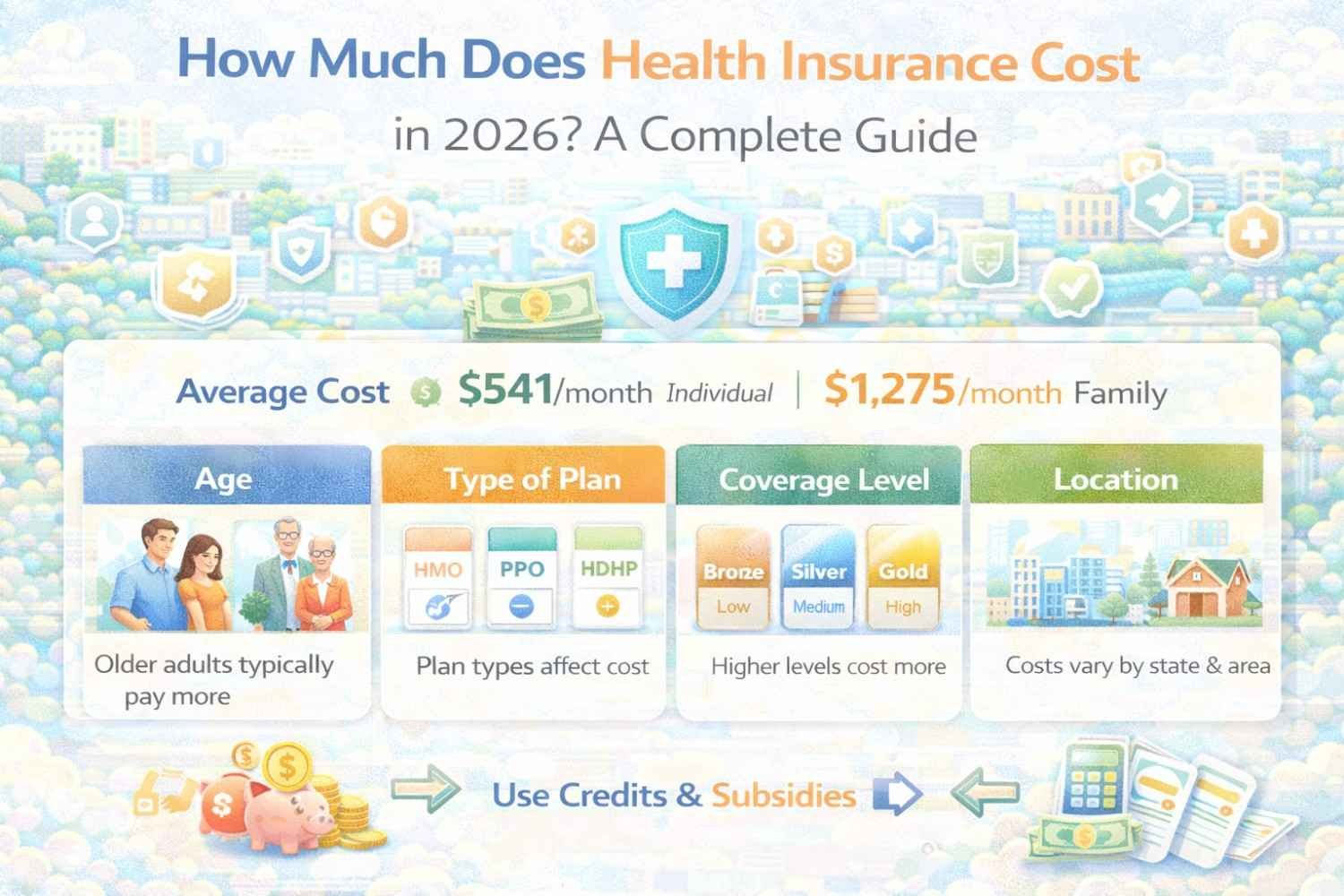
Healthcare expenses continue to increase around the world, making health insurance one of the most important financial protections for individuals and families. Without insurance coverage, medical treatments, hospital stays, surgeries, and prescription medications can cost thousands of dollars. Because of this, many people are asking an important question: How Much Does Health Insurance Cost in 2026?
The cost of Health Insurance in 2026 varies depending on several factors including age, location, type of coverage, insurance provider, and the number of family members covered under the policy. Learning how health insurance costs are calculated allows individuals to compare policies and find the Best Health Insurance Plans that match their healthcare needs and financial budgets.
What Determines Health Insurance Cost in 2026?
The price of health insurance is not fixed and can vary significantly depending on multiple factors.
Important factors include:
- Age of the insured individual
- Type of insurance plan
- Coverage level
- Geographic location
- Lifestyle and health conditions
Understanding these factors helps individuals estimate Health Insurance Premiums in 2026.
Types of Health Insurance Plans and Their Costs
Individual Health Insurance
Designed for a single person who needs medical coverage.
Average monthly cost in 2026:
$300 – $600 per month
Family Health Insurance Plans
These policies cover multiple family members under one plan.
Average monthly cost in 2026:
$800 – $1,500 per month
Employer-Sponsored Health Insurance
Many employers offer health insurance benefits to employees.
Average employee contribution:
$100 – $400 per month
High-Deductible Health Plans
These plans offer lower premiums but require higher deductibles.
Average monthly cost:
$200 – $400
Step-by-Step Guide: How Health Insurance Costs Are Calculated
1. Age of the Insured Person
Age is one of the most important factors affecting Health Insurance Premiums.
Younger individuals usually pay lower premiums because they are considered lower-risk policyholders.
Example:
- Age 25: Lower premiums
- Age 50+: Higher premiums
2. Geographic Location
Healthcare costs vary depending on location. Urban areas with higher healthcare expenses often have higher insurance premiums.
Factors include:
- Hospital costs
- Medical provider availability
- Regional healthcare regulations
3. Coverage Level
The level of coverage directly impacts insurance costs.
Plans with extensive coverage typically have higher premiums.
Coverage options may include:
- Preventive care
- Hospitalization services
- Prescription drug coverage
- Specialist consultations
4. Deductibles and Out-of-Pocket Costs
A deductible is the amount you pay before insurance coverage begins.
Higher deductibles usually result in:
- Lower monthly premiums
- Higher out-of-pocket costs
Lower deductibles often mean higher premiums but better financial protection.
5. Lifestyle and Health Conditions
Insurance companies may evaluate health-related factors such as:
- Smoking status
- Chronic illnesses
- Body mass index (BMI)
Healthier individuals may qualify for lower insurance premiums.
6. Insurance Provider
Different insurance companies offer different pricing structures.
Comparing providers helps individuals find the Best Health Insurance Plans in 2026.
7. Government Subsidies and Assistance Programs
Some individuals may qualify for financial assistance programs.
Government subsidies may reduce premiums for:
- Low-income individuals
- Families with financial hardship
Health Insurance Cost Comparison Table (2026)
| Insurance Plan Type | Average Monthly Cost | Coverage Level |
|---|---|---|
| Individual Health Insurance | $300 – $600 | Basic to moderate |
| Family Health Insurance | $800 – $1,500 | Comprehensive |
| Employer-Sponsored Insurance | $100 – $400 | Moderate to comprehensive |
| High-Deductible Health Plan | $200 – $400 | Basic coverage |
Tips to Reduce Health Insurance Costs
- Compare multiple insurance providers
- Choose higher deductible plans
- Use preventive healthcare services
- Maintain healthy lifestyle habits
Common Mistakes to Avoid
Choosing Plans Based Only on Premiums
Low premiums may result in limited coverage.
Ignoring Network Providers
Some plans restrict access to certain hospitals.
Not Reviewing Policy Exclusions
Certain treatments may not be covered.
Understanding policy terms prevents unexpected costs.
Benefits of Having Health Insurance
- Protection from large medical expenses
- Access to quality healthcare services
- Preventive care coverage
- Financial security for families
Conclusion
Understanding How Much Health Insurance Costs in 2026 is essential for individuals and families who want to protect themselves from rising healthcare expenses. The cost of insurance varies depending on several factors including age, coverage level, geographic location, and insurance provider.
Instead of focusing only on monthly premiums, individuals should consider the overall value of a policy, including coverage limits, network providers, and out-of-pocket expenses. With the right strategy and careful comparison of available options, consumers can find Affordable Health Insurance in 2026 that offers reliable protection and peace of mind against unexpected medical costs.